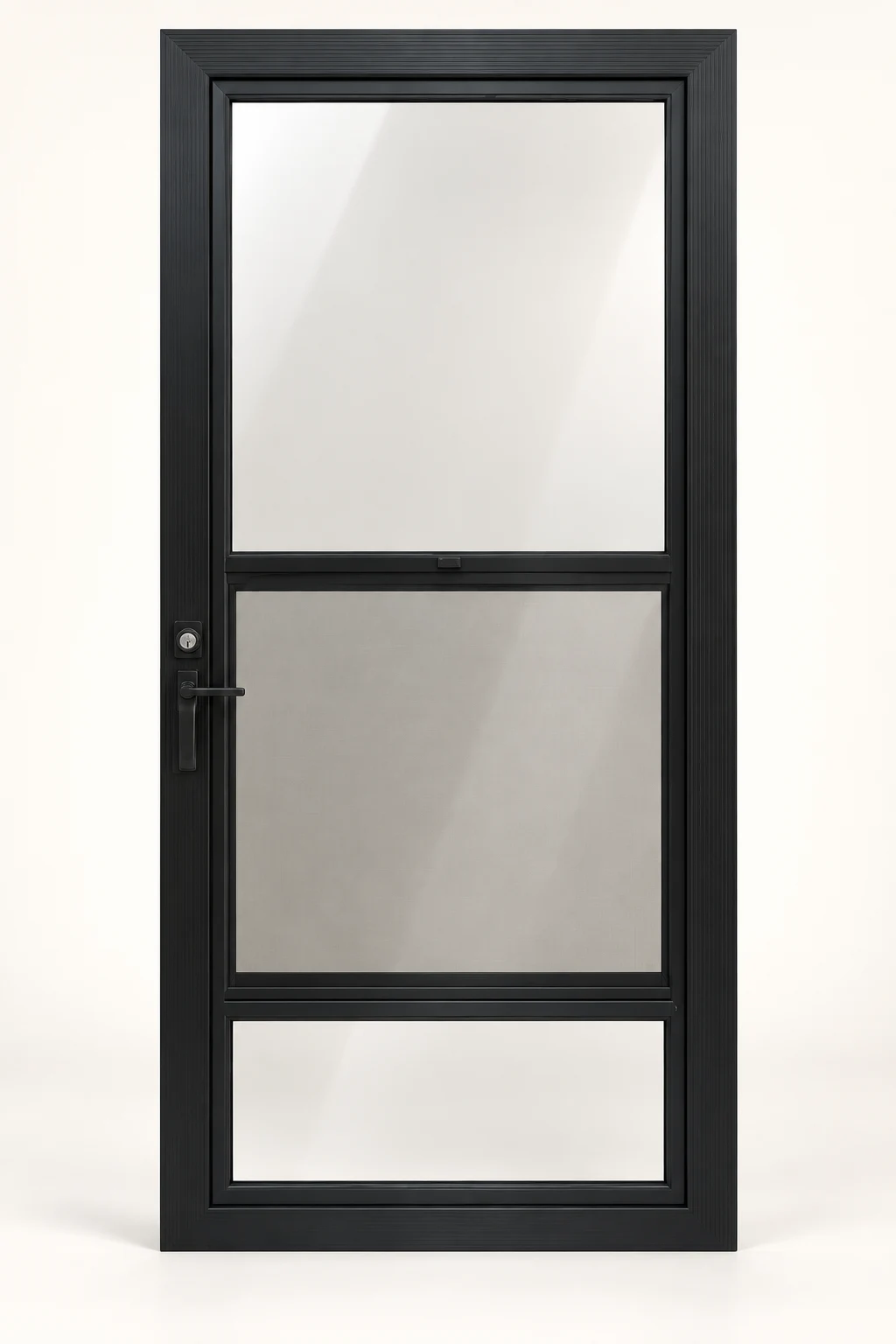
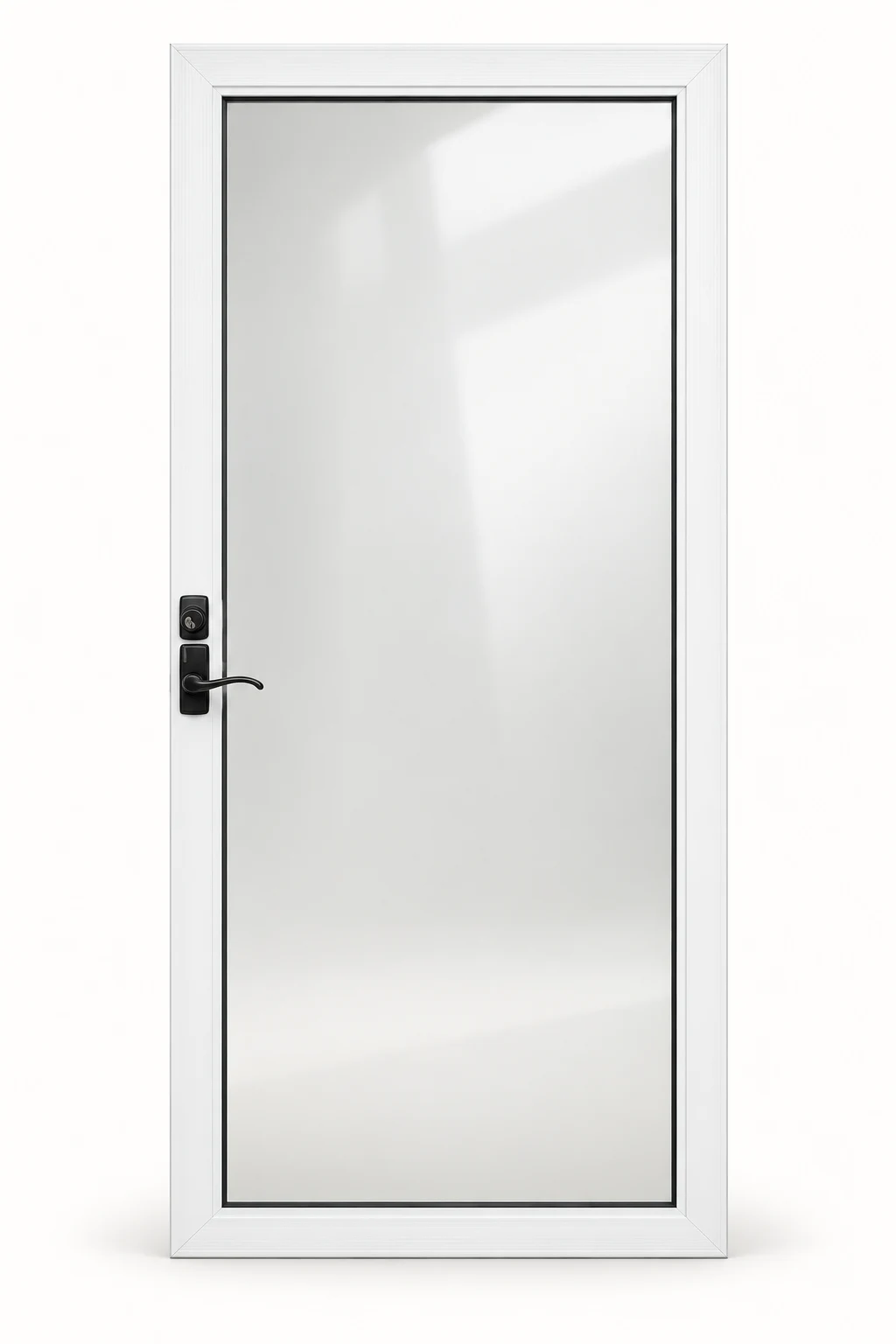
Buyer guide
Plan custom-size replacement storm doors around the entry
Where this door type works
This route is for openings that fall outside common retail ranges or have trim conditions that make a nominal size unreliable. It also helps when the old door has been modified and no longer represents the actual opening.
What to compare before requesting a quote
Compare full-view and midview layouts, interchangeable and retractable screens, lower-panel protection, handle rail, closer position, finish and serviceable replacement parts. Custom size should not mean giving up practical choices.
Measurements and opening photos
Remove assumptions from the process: take three widths, three heights, both diagonals, mounting-surface width, sill depth and angle, hinge side and clear photographs with a tape in place. Use the smallest usable dimensions, not an average.
Installation planning
Dry-fit the frame, establish a plumb hinge side and equal reveal, then fasten and seal according to the wall and trim material. A custom door can compensate for size, but installation still has to manage an out-of-square opening correctly.
Care and service life
Maintain closers, hinges, sweeps, screens and sealant as separate service items. Keep the final approved dimensions and configuration so later replacement panels or hardware can be identified without starting over.
A costly mistake to avoid
Do not order from the label on the old door or from a single tape reading. Labels describe a nominal product; the opening and current mounting condition determine the replacement that will fit.
What the written quote should identify
For custom-size replacement storm doors, the final scope should identify the finished opening or frame dimensions, measurement convention, hinge side, swing, frame and panel arrangement, glass or screen system, finish, hardware preparation, included accessories, delivery method and installation responsibility. If a choice affects fit, operation, appearance or later service, it belongs in the written document rather than an assumption made from the illustration.
How to compare two configurations fairly
Place the options side by side and normalize the components before comparing the total. One configuration may include a screen, closer, handle set, retainer, pairing hardware or specialty frame that another leaves out. Also compare the work expected at the opening: trim repair, subframe, anchors, sealant, removal, unloading and disposal can change the real project cost even when the door descriptions sound similar.
Configuration images are planning illustrations. The approved written quote defines the final dimensions, components, finish and hardware.

 Configuration Review
 Delivery Terms Confirmed
 Measurement Review
 Custom Door Planning
 Quote Support